RTG 2660 Approach Avoidance
RTG 2660 Approach Avoidance
How the brain decides between approach and avoidance behavior
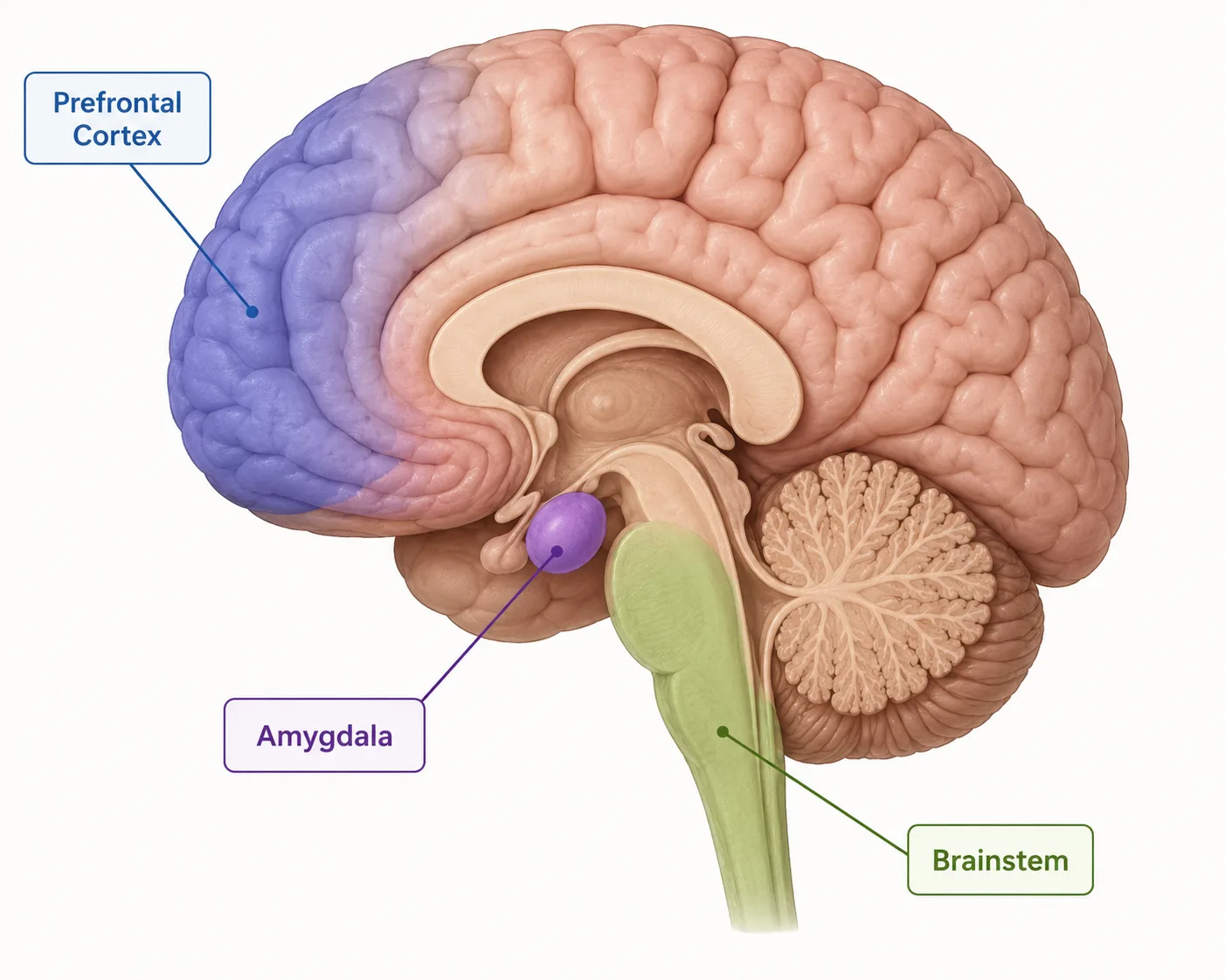
ChatGPT/Prompt: prefrontal cortex, amygdala, and brainstem/2026
The project investigates how the brain decides between approach and avoidance
behavior—two fundamental and often opposing action strategies that
shape our responses in uncertain or conflicting situations. While
approach behavior is typically linked to reward systems, avoidance is
primarily governed by fear- and stress-related networks. Central to this
research is the question of how these different systems interact within
the brain and how rapid switching between them is achieved. A key
factor in this process is risk assessment, which determines whether we
approach or avoid a given situation. Neuroscientific evidence suggests
that connections between the prefrontal cortex, amygdala, and
brainstem, as well as coordinated patterns of neural activity, play a
crucial role in this decision-making process.
The aim of the project is to precisely identify and characterize the
underlying neural circuits and their dynamics in animal models. In
addition, targeted interventions in these networks are being explored to
experimentally shift the balance between avoidance and approach
behavior. To this end, advanced methods are used that allow for the
precise manipulation and monitoring of brain activity. In the long term,
the insights gained are intended to be translated into innovative
therapeutic approaches, such as neurofeedback-based interventions.
These could be particularly beneficial for conditions associated with
excessive avoidance behavior and may open up new avenues for
individualized treatment strategies.
The project is part of the Research Training Group 2660: Approach-
Avoidance, funded by the German Research Foundation.